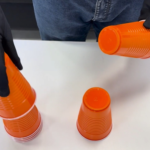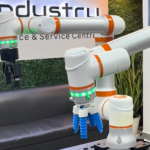
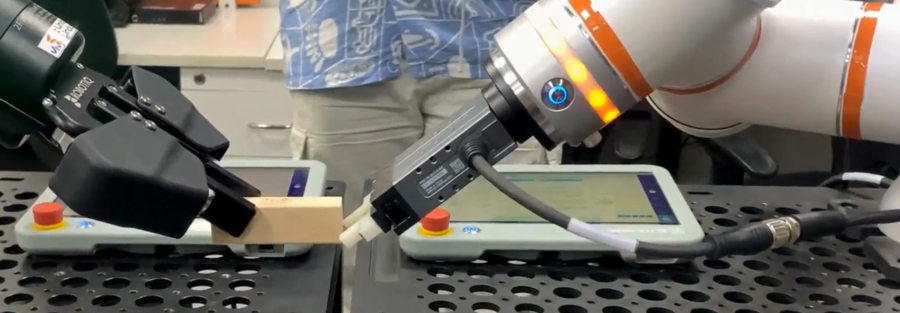
Every robot that works in the real world was trained on data someone collected.
It’s easy to watch a demo of a humanoid robot folding laundry or a warehouse arm sorting packages and think the magic lives entirely inside the machine clever motors, a fast processor, a well-tuned algorithm. But strip away the hardware and the software, and you’ll find something much more human at the core of every capable robot: thousands of hours of real-world demonstrations, painstakingly captured, labeled, and structured so a model can learn from them.
Robots don’t learn to be useful by guessing. They learn the way people do by watching, repeating, and being corrected. The only difference is that a robot needs that “watching” turned into data: video streams, motion-capture trajectories, force-sensor readings, annotated action sequences. Someone has to design that capture process, run it, label it, and package it into a dataset clean enough to train on. That work doesn’t happen by accident, and it’s the part of robotics that gets the least attention even though it determines almost everything about how well a robot eventually performs.
Why Hardware Alone Doesn’t Make a Robot Smart
There’s a common assumption in the public conversation about robotics: build better hardware, and capability follows. Stronger actuators, more dexterous grippers, faster processors surely that’s the bottleneck.
It isn’t. The actual bottleneck is data. A robot arm with state-of-the-art grippers still doesn’t know how to fold a shirt, pick a ripe tomato, or hand someone a tool the right way around. Those are skills, and skills are learned from examples not derived from first principles. A humanoid robot can have flawless balance control and still fail at a task as simple as wiping a counter, because no one ever showed it, in a form it could learn from, what “wiping a counter” actually looks like across a hundred different counters, cloths, and spill types.
This is the bottleneck the robotics industry is quietly running into: there’s no equivalent of the internet’s text corpus for physical skills. Large language models had billions of web pages to learn from. Robots learning to act in the physical world have almost nothing comparable because physical-world data doesn’t already exist in a usable, structured, labeled format. It has to be captured, on purpose, from scratch.
Robotics Training Data Collection Is the New Infrastructure
If you think about what made the last decade of AI progress possible, a huge part of it was data infrastructure pipelines that turned raw, messy information into something a model could learn from at scale. Physical AI and robotics are now at that same starting point, except the raw material isn’t text sitting on servers. It’s human skill, happening in factories, kitchens, farms, and warehouses, that has never been recorded in a form a machine can study.
That’s the work behind every robot that actually functions outside a lab demo: someone designed a capture rig, deployed cameras and sensors and motion-tracking systems, asked a person to perform a task dozens or hundreds of times, recorded every angle and force and failure, labeled the actions and objects involved, and delivered a dataset clean enough to train a model on. It’s slow, detailed, unglamorous work and it’s the actual engine behind robotics progress.
This is the work we do at Nferent AI. We’re not building the robots themselves. We’re building the data layer underneath them the part that determines whether a robot can actually do something useful once it leaves the lab.
What That Looks Like in Practice For Robotics Training Data
Our approach breaks down into three connected pieces:
- Data Capture. We design and run real-world data collection across diverse environments factories, homes, warehouses, workshops using cameras, sensors, motion-capture systems, and teleoperation setups built specifically to capture how humans perform skilled physical tasks. The goal isn’t generic footage; it’s structured, multi-modal demonstrations a model can actually learn from.
- Data Annotation. Raw footage isn’t training data until it’s labeled. We do skill labeling, object tagging, action segmentation, and failure recording, so every demonstration comes with the structure a robotics model needs to understand not just what happened, but what mattered about it.
- Dataset Delivery. Clean, ready-to-train datasets, delivered via API or secure transfer, mixing real and synthetic data as needed, with the option to build fully custom datasets around a specific skill a client needs.
The workflow itself is simple to describe, even if it’s hard to execute well: a robotics company tells us the skill they need folding a shirt, picking produce, navigating a warehouse aisle we design a capture setup tailored to that exact skill, we collect real-world demonstrations of it being performed, and the resulting dataset goes into training and, eventually, deployment.
Why India Is the Right Place to Build This
There’s a specific reason this work is happening where it is. India has an enormous, diverse, and largely undocumented base of real-world skilled labor manufacturing floors, workshops, farms, and homes where people perform exactly the kinds of dexterous, situational tasks robotics companies are trying to teach machines to do. That skill exists in abundance. What’s been missing is the infrastructure to turn it into structured data robotics companies can actually use.
That’s the opportunity: not just supplying datasets to robotics companies elsewhere, but building the data layer that lets India’s manufacturing base and skilled workforce become a genuine engine for physical AI progress globally. Every dataset captured from a real welder, a real warehouse picker, a real home cook is a small piece of the bridge between human skill and machine capability.
Teaching the Future
The phrase gets used a lot in robotics marketing “teaching machines” but it’s worth taking literally. A robot that can competently fold laundry was taught, in a very real sense, by people who folded laundry over and over in front of cameras and sensors, while someone else carefully labeled every motion involved. A warehouse robot that sorts packages without knocking them over was taught by workers who performed that exact task, recorded and structured precisely enough for a model to absorb it.
Every robot that works in the real world was trained on data someone collected. That’s not a footnote to robotics progress it’s the foundation of it. The hardware gets the headlines. The data infrastructure underneath it is what actually makes the robot capable.
That’s the work we’re focused on at Nferent AI: not just collecting data, but building the pipeline that turns human skill into robot intelligence one demonstration, one label, one dataset at a time.
Learn more or partner with us at nferent.ai