Embodied AI data collection is the single biggest constraint facing robotics labs in 2026. Walk into any robotics conference and you’ll hear the same announcements on repeat: new humanoid platforms, new foundation models, new billion-dollar funding rounds. What you won’t hear as often but what every serious researcher in the room is quietly obsessing over is data collection: the one constraint that money alone can’t solve.
This isn’t a funding problem. Over $6 billion went into humanoid robots in 2025 alone, yet the fundamental bottleneck remains unchanged more capital can buy more hardware and hire more engineers, but it cannot manufacture the one thing these systems actually need. That thing is data specifically, synchronized, multimodal, physical-interaction data that simply doesn’t exist anywhere on the internet.
For US-based AI labs, robotics startups, and foundation model companies, this creates a strategic opening. Whoever solves embodied AI data collection first reliably, at scale, with quality that holds up to research scrutiny gains a compounding advantage that’s extraordinarily hard for competitors to catch up to. This is the exact space companies like Nferent AI are stepping into, building dedicated data pipelines so labs don’t have to solve this problem from scratch.
Why Embodied AI Data Collection Can’t Just “Use the Internet”
Every previous wave of AI had a shortcut: the internet already contained the training data. Language models trained on billions of web pages, image models trained on hundreds of millions of photographs for both, the data already existed. Embodied AI data collection doesn’t get that shortcut.
Embodied AI is artificial intelligence that lives inside a physical body and learns by interacting with the real world through sensors and actuators and no equivalent corpus exists for it, because each example is a physical action that has to be performed and recorded. The volume gap isn’t marginal. It’s several orders of magnitude smaller than the corpora that powered language and vision models, and the limiting factor is physical collection, not funding.
This has led to some genuinely novel approaches to embodied AI data collection from major US companies. In March 2026, DoorDash launched a standalone app called Tasks, paying its eight million US delivery couriers to strap on body cameras and film themselves washing dishes, folding clothes, and making beds — not to improve food delivery, but to generate training data for humanoid robots. That a food delivery giant is now functionally operating as a robotics data company tells you everything about how seriously this bottleneck is being taken.
But even this kind of large-scale effort only addresses part of the problem. A robot learning to wipe a counter needs multidimensional sensor traces vision, depth, joint position, and motor command captured in tight time synchronization during a real physical interaction. Collection is only half the problem; annotating that kind of time-synchronized, multimodal data is a fundamentally different task from labeling a single image. This synchronized capture-plus-annotation workflow is precisely the kind of operational pipeline Nferent AI has built out, so labs receive data that’s already structured and ready for training rather than raw footage that still needs months of processing.
The Three Pillars of Embodied AI Data Collection
The industry has converged on three primary approaches to embodied AI data collection, and each one solves part of the puzzle while introducing its own limitation.
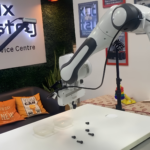
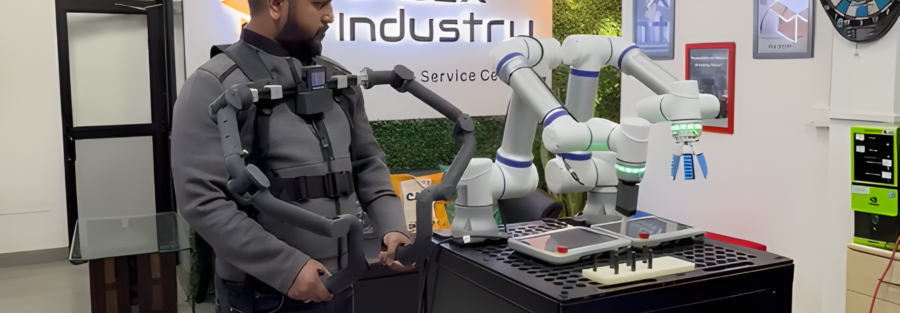
- Teleoperation is the gold standard for fidelity. An operator controls the robot remotely through leader-follower arms, VR headsets, exoskeleton suits, or handheld interfaces while the system records every joint angle, gripper state, force reading, and camera frame in synchrony, producing exact action-state correspondence with zero embodiment gap. The catch is throughput. Skilled teleoperators produce roughly 5 to 50 episodes per hour depending on task complexity, and data quality degrades as operators fatigue. It also doesn’t scale to failure recovery without deliberate protocol design if operators always succeed, the policy never learns how to recover from perturbations.
- Simulation solves the scale problem but introduces a different one. Simulation generates millions of episodes cheaply but introduces a sim-to-real gap that fails on contact-rich tasks. An agent trained in a simulated environment often fails unexpectedly when confronted with the subtle imperfections and complexities of the real world friction, collisions, fluid behaviors, lighting, camera exposure, and material properties are all difficult to model accurately, and slight differences between simulated and real environments tend to accumulate in long-term decision-making.
- Human video offers the scale and diversity that teleoperation can’t match but at a cost. Human video scales effortlessly but lacks robot action labels and carries an embodiment gap.
The conclusion the industry has reached about embodied AI data collection is unambiguous: the teleoperation vs. simulation vs. human video debate has a clear answer it isn’t a choice, it’s a stack. Teleoperation gives you fidelity, simulation gives you scale, and human video gives you diversity. Production embodied AI pipelines blend all three, weighted to the deployment target, the embodiment, and the budget.
That’s a sophisticated answer and it’s exactly why most labs can’t execute it well in-house. Building and operating all three pipelines simultaneously, at quality levels that survive peer review and real-world deployment, is a specialized operational challenge that pulls engineering talent away from model development. Nferent AI is built around exactly this blended approach to embodied AI data collection running teleoperation programs, sourcing diverse human video, and structuring data for sim-to-real alignment, so labs get the full stack without managing three separate vendors.
The Hidden Cost in Embodied AI Data Collection
Even when labs do manage to collect data across multiple sources, a second-order problem emerges. Hardware diversity and inconsistent control mechanisms across robot platforms pose significant challenges to data standardization and reproducibility, hindering model generalization across different systems. Numerous physical phenomena friction, resistance, lighting variations cannot be accurately modeled, and dynamic factors like pedestrians and obstacles require robots to possess substantial adaptability and robustness that current systems struggle to achieve.
This is precisely why the hardest unsolved problem in 2026 is not raw model capability but reliable, repeatable manipulation in messy real environments models trained mostly on simulation or lab demos often fail on the variability of real production lines, making data from actual real-world deployments increasingly valuable for closing that gap.
Where the Embodied AI Data Collection Market Is Moving
This bottleneck has created an entirely new category of company one that didn’t really exist five years ago. Across the US, a wave of specialized embodied AI data collection partners has emerged specifically to solve this problem for robotics labs, rather than asking labs to solve it themselves.
Some are focused on raw scale of egocentric capture. One newer platform’s flagship product delivers over 100,000 hours of first-person video for manipulation and physical task learning, focusing specifically on the massive video datasets that industrial robots and embodied AI need. Others have built full-stack annotation platforms purpose-built for the format. These platforms label first-person, head-mounted, and wearable point-of-view video — the core data format for humanoid and embodied AI training syncing multi-sensor streams for richer, context-aware datasets, while managing the full pipeline from collection through annotation, validation, and model evaluation to reduce the number of vendors a team needs to manage. Critically, many are also built for enterprise compliance and security, including PII and PHI handling, making them a strong fit for regulated industries and defense-adjacent robotics programs.
A different model entirely has emerged from the YC ecosystem. One Y Combinator-backed company builds what it describes as the world’s most diverse and large-scale real-world workplace robot and egocentric dataset, powering frontier labs developing robotics foundation models by providing egocentric data (real-workplace human video with hand and body pose, depth, and subtask labels), robot trajectory data from manipulators and humanoids in real industry settings, and human-in-the-loop rollouts where remote operators recover robots when they fail capturing exactly the kind of data that feeds back into continuous model improvement. Notably, this company runs a marketplace model where workplaces get paid to host data-collection and evaluation sessions, while labs access in-the-wild data that actually reflects deployment conditions.
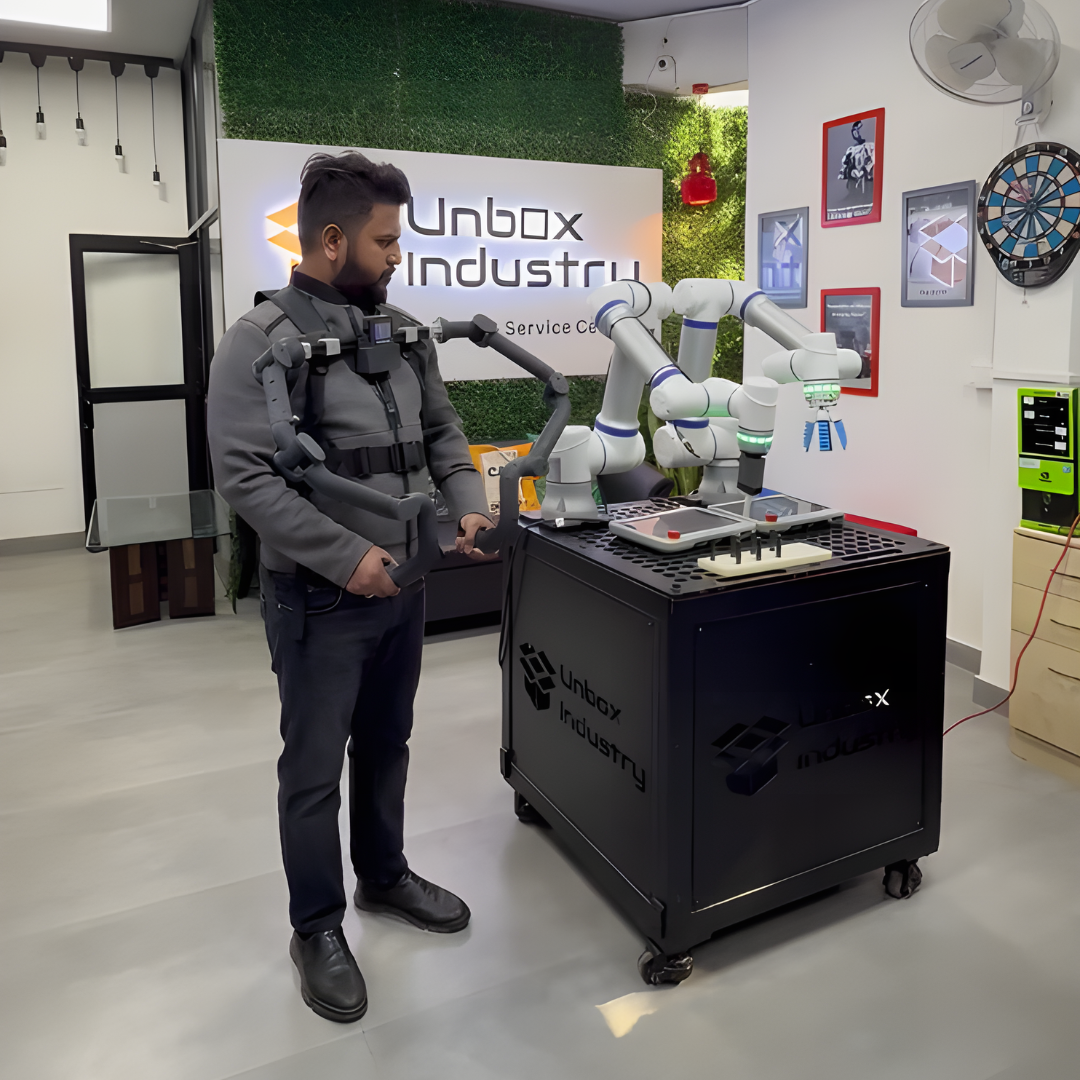
Nferent AI helps organizations build the data infrastructure needed to power Physical AI, robotics, and intelligent automation systems.
Nferent AI sits within this same emerging category a dedicated embodied AI data collection partner offering teleoperation capture, diverse real-world environment coverage, multimodal synchronized recording, and standardized annotation, built specifically so US robotics labs and foundation model teams don’t have to build this infrastructure themselves.
How Nferent AI Solves Embodied AI Data Collection
This is exactly the gap Nferent AI is built to address for US robotics labs and foundation model companies.
Rather than asking research teams to stand up teleoperation rigs, recruit operators, build annotation pipelines, and solve standardization across hardware platforms themselves, Nferent AI operates as a ready-made embodied AI data collection layer that plugs directly into the teleoperation-simulation-human video stack the industry has converged on.
Specifically, Nferent AI offers:
- Teleoperation and demonstration capture at scale — trained operator teams running structured and free-form data collection sessions, producing the high-fidelity, zero-embodiment-gap trajectory data that VLA models depend on, with deliberate protocols for capturing failure-recovery behaviors, not just successful runs.
- Diverse, real-world environment coverage — homes, warehouses, retail floors, and industrial settings across a wide range of physical environments, addressing the “messy real environments” problem that simulation alone can’t solve.
- Synchronized multimodal recording — vision, depth, force-torque, proprioceptive, and audio data, captured and time-aligned to the precision research teams need.
- Annotation and standardization — hierarchical, episode-based labeling that’s compatible with major VLA training frameworks, reducing the standardization burden that comes with hardware diversity across robot platforms.
- Scalable, flexible engagement — from pilot batches to ongoing production pipelines, with custom collection protocols designed around a lab’s specific model gaps and failure modes.
The Bottom Line on Embodied AI Data Collection
Data is the bottleneck for embodied AI, not compute. That single sentence explains nearly everything happening in robotics right now the billion-dollar funding rounds chasing world models, the food-delivery apps turned data-collection platforms, the YC startups pivoting entirely to data marketplaces, and the rise of specialized annotation companies built specifically for egocentric and multimodal robot data.
For US companies racing to ship embodied AI products in 2026 and beyond, the labs that solve embodied AI data collection through the right mix of teleoperation, simulation, and human video, delivered by partners who understand the standardization and compliance demands of this category will be the ones whose models actually generalize when they leave the lab. Everyone else will keep hitting the same wall, no matter how much capital they raise.
If your team is hitting this same data bottleneck, Nferent AI can run a pilot program to demonstrate quality and turnaround before committing to volume reach out to discuss your embodied AI data collection requirements.